

How middle managers should actually approach every Tech Conference
The conference paradox for middle managers

Here is the truth most conference marketing won’t tell you !

Simply showing up and bouncing between keynotes is not a strategy. It is expensive tourism.
You are not a C-suite executive there to “get inspired” by vision statements.
You are not a developer who can dive deep into technical breakouts for three days straight.
You are somewhere in between, responsible for translating enterprise capability into real project outcomes.
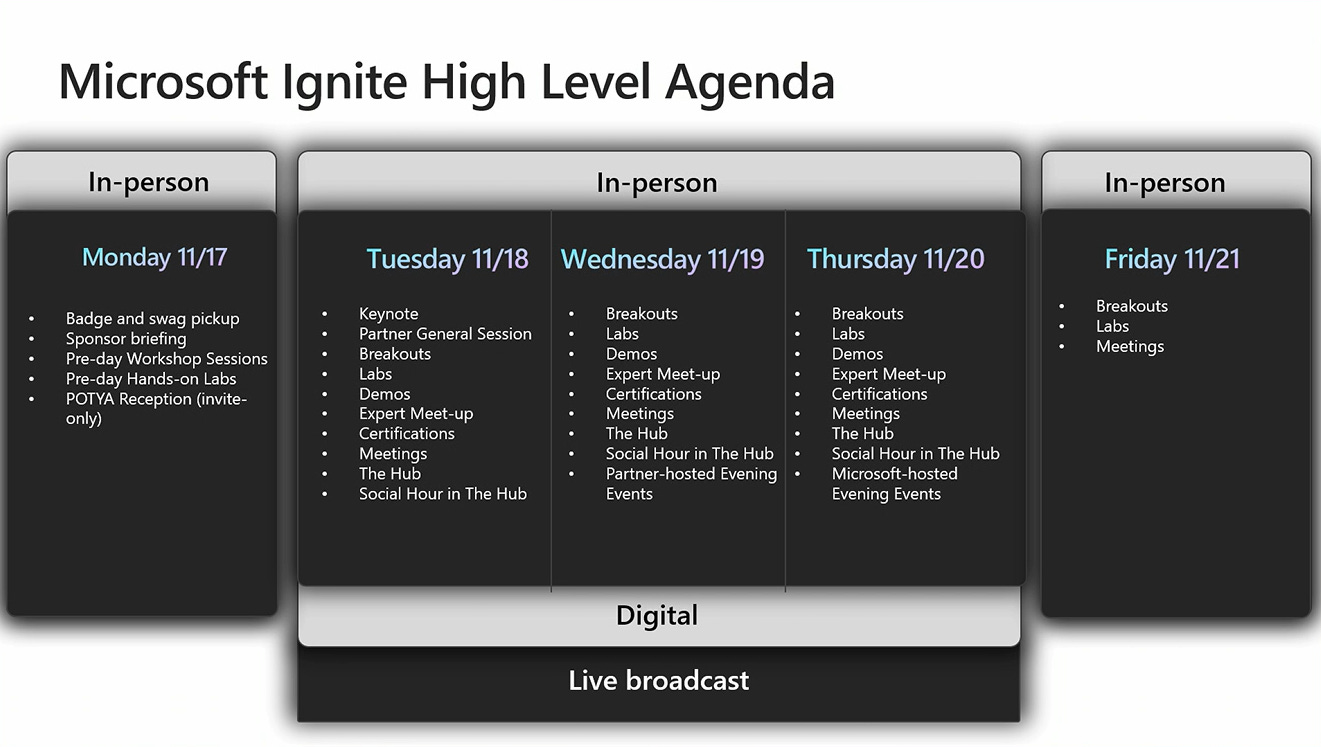
Looking at the Ignite agenda, the challenge becomes clear. Tuesday through Thursday are packed with overlapping sessions, Breakouts, Labs, Demos, Expert Meet-ups, Certifications, Meetings, The Hub, Social Hours, and Partner Events.
It’s designed for abundance, not clarity !
Which sessions matter for your projects ? Which connections will actually help you next quarter ? How do you avoid burning out by Wednesday afternoon ?
Three questions that change everything
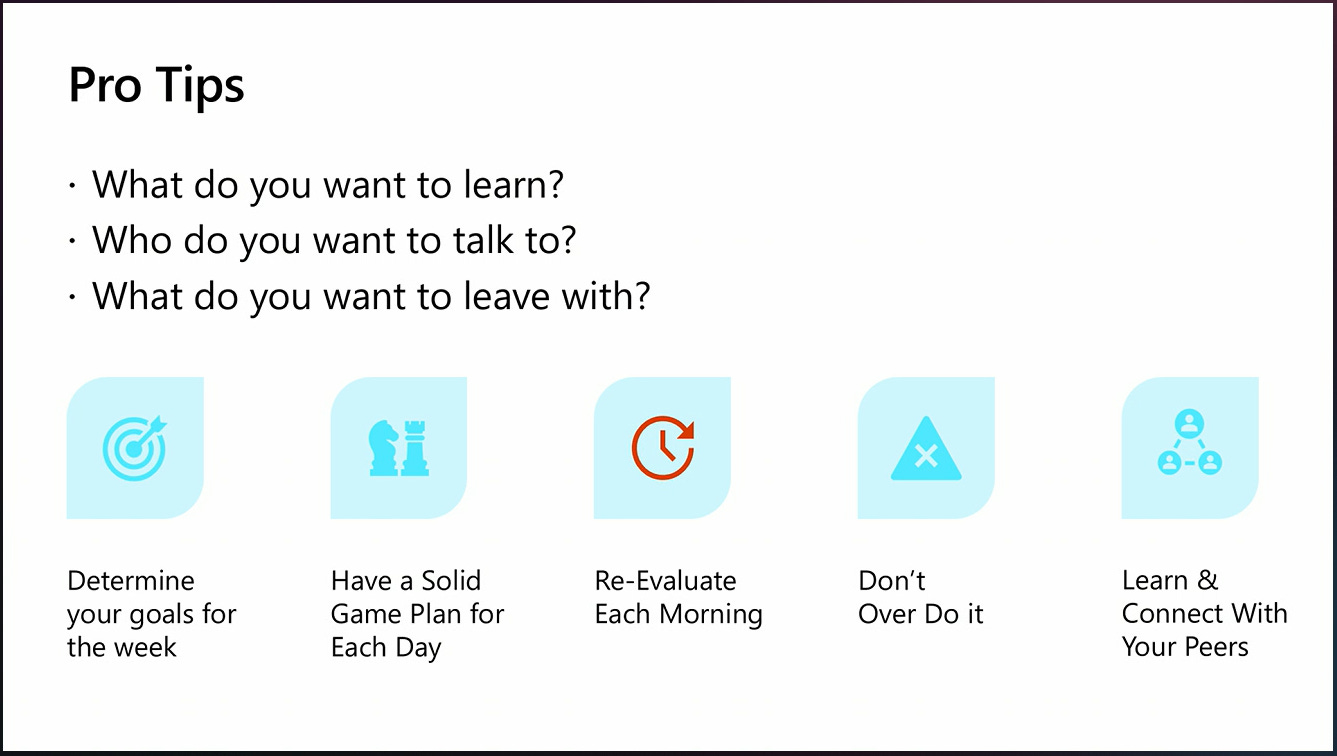
Microsoft’s own Pro Tips guide asks three simple questions:
• What do you want to learn ?
• Who do you want to talk to ?
• What do you want to leave with ?
These aren’t just pre-event checklist items. They’re your north star for the entire week. Without clear answers, you’ll default to reactive mode, following the crowd, attending sessions because they sound interesting, collecting business cards you will never follow up on.
For middle managers, these questions need sharper answers.
Not “learn about AI” but “understand which AI tools can reduce our project reporting overhead by 30%.”
Not “network with peers” but “find three managers who’ve successfully implemented low-code solutions in regulated environments.”
The five Pro Tips that actually work
1. Determine your goals for the week
Before your badge pickup, get specific.
What’s one capability you need to bring back ? What’s one problem you need solved ? What’s one connection that would materially impact your Q1 2026 roadmap ?
Write it down. Share it with your team. This isn’t about limiting yourself, it’s about having a filter when you’re overwhelmed.
2. Have a solid game plan for each day
Notice the agenda structure.
Each day mixes formats. Breakouts for learning, Labs for hands-on practice, Expert Meet-ups for specific questions, The Hub for informal connection.
Map your priority sessions, but leave gaps. The best conference insights often come from conversations in The Hub or chance encounters between sessions.
3. Re-evaluate each morning
This is the tip most people skip, and the most valuable.
Tuesday’s Keynote might completely change your Wednesday priorities. An expert meet-up conversation might reveal you’re solving the wrong problem.
Spend 15 minutes each morning reviewing your plan based on what you learned yesterday.
4. Don’t over do it
You cannot attend everything.
Trying to maximize every hour leads to information overload and networking exhaustion. You’ll return home with hundreds of notes you’ll never review and business cards from people you barely spoke to.
Strategic absence is as important as strategic presence. Skip the Partner-hosted Evening Events if you need processing time. Miss the Social Hour if you need to decompress. Your goal isn’t attendance theater, it’s valuable takeaways !
5. Learn & connect with your peers
This is where middle managers often miss the biggest opportunity.
The person next to you in a breakout session isn’t just another attendee, they’re likely solving similar problems with different approaches.
The manager from another company in your lab session might be six months ahead of you on the exact tool you’re evaluating. That’s worth more than any keynote slide deck.
What to actually do with all this ?
Microsoft Ignite, and conferences like it, showcase incredible capability. Power Platform, Azure AI, Microsoft 365 integrations, Copilot everywhere. The technology is real and often genuinely useful.
Here’s what the sessions won’t tell you, implementation isn’t about the tool. It’s about the orchestration, bringing your team along, managing stakeholder expectations, proving ROI on a realistic timeline, and building digital resilience in your organization.
That’s where the conference content ends and your real work begins.
The middle manager’s conference advantage
You have something most attendees don’t, practical constraints that force strategic thinking. You can’t chase every shiny object. You can’t promise your leadership enterprise-wide transformation by February. You need solutions that work with your actual team, timeline, and resources.
Those constraints are not limitations, they are filters. They help you ask better questions in expert meet-ups. They help you spot the practical sessions in a sea of aspirational content.
They help you have more valuable peer conversations because you are solving real problems, not theoretical ones.
Your turn
For those attending Ignite or similar conferences, what’s your one must-accomplish goal ? What’s your strategy for avoiding overwhelm ?
For those who’ve attended before, What’s one lesson you learned the hard way about maximizing conference value ?
And for everyone, How do you close the gap between conference inspiration and Monday morning implementation ?
At Wema.Digital, we help middle managers translate enterprise capabilities into practical project outcomes, turning the promise of digital transformation into tools and processes that actually work for industrial and technical teams.
Drop a comment: What’s the biggest gap between what conferences promise and what you can actually implement ?